When we think about health and safety at work, physical risks often come to mind first. But in 2026, workplace mental health is expected to be firmly on the agenda.
The Health and Safety Executive (HSE) identifies work-related stress and mental health as important occupational health issues, with reducing work-related ill health — including a specific focus on mental health and stress — forming part of its long-term strategy.
From healthcare to construction, burnout, work-related stress and harassment are increasingly recognised as issues that can affect employees’ health and wellbeing. The way work is designed, managed and communicated can have a significant impact on mental health at work.
While the HSE does not require routine “mental health checks” for individual employees, employers do have a legal duty to protect employees from work-related stress. This includes assessing the risk of stress-related ill health arising from work activities and taking reasonably practicable steps to control that risk
What are psychosocial hazards?
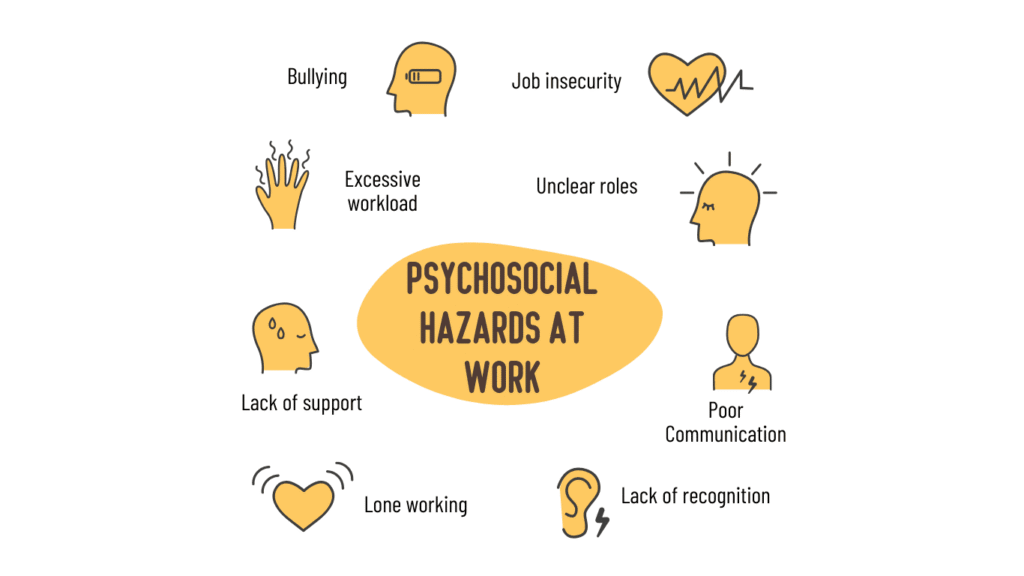
Psychosocial hazards are aspects of work that can increase stress and negatively affect mental health if they’re not well managed. They’re often less visible than physical hazards, but just as important.
Common examples include:
- Bullying or inappropriate behaviour
- Conflicting demands or unclear roles
- Little control over how work is done or the pace of work
- Lack of support from colleagues or managers
- Poor communication
- Shift work, lone working and remote working
- Job insecurity or poorly managed organisational change
- Working with high-dependency clients
Many of these issues can build up slowly over time, which is why they’re often overlooked.
Why workplace mental health is a priority in 2026
Psychosocial health now sits alongside other key Occupational Health inspection areas for 2026, including Health & Social Care, Agriculture, ergonomics, chemical and physical agents, occupational cancers and health surveillance.
For employers, this means being able to show that mental health risks are being identified, assessed and managed in the same way as physical safety risks.
Let’s get your team ready for 2026
As we head into the new year, the message for Irish businesses is clear: supporting your team’s mental health now sets the foundation for a safer, stronger workplace.
Whether it’s embedding mental health awareness into daily routines, providing mental health checks, or equipping managers with the skills to spot early signs of stress, proactive action does more than tick boxes—it gives your staff the confidence and support to thrive.
No matter the size of your team or the industry you work in, BetterCare is here to help.
Our workplace mental health checks and Employee Assistance Programme (EAP) are practical, engaging, and tailored to the realities of your workplace—from busy offices to high-pressure frontline roles.
We also offer seminars and webinars, HR training, and manager workshops, all designed to raise awareness, build skills, and provide early support for your team’s mental wellbeing.
Let’s make 2026 the year your team feels supported, resilient, and ready for whatever comes next.